The Indian Council of Medical Research (ICMR) plays an important role in maintaining quality, safety and precision of diagnostics laboratories in India by proving ICMR guidelines.
These ICMR guidelines stipulate essential protocols for sample management, safety in labs, laboratory hygiene and sanitation data reporting, biosafety, quality assurance, laboratory facilities, and ethical considerations.
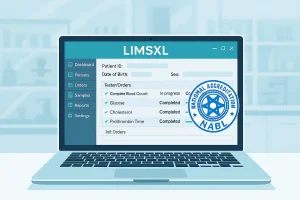
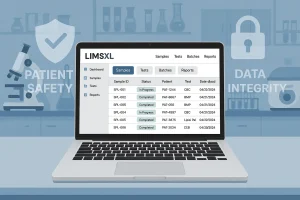
A Laboratory Information Management System (LIMS) facilitates adherence to ICMR guidelines by automating processes, implementing standardized SOPs, monitoring each sample, preserving audit trails, connecting analyzers, and enhancing quality control. A LIMS serves as the foundation for compliance with ICMR standards, NABL accreditation, and overall operational excellence.
What is ICMR?
The Indian Council of Medical Research (ICMR) is the oldest and leading biomedical research organization in India, established in 1911 and overseen by the Ministry of Health & Family Welfare.
ICMR received significant public attention during the COVID-19 pandemic, as it set standardized testing protocols, released RT-PCR guidelines, and authorized laboratories throughout India for SARS-CoV-2 testing.
Essential Elements of ICMR Guidelines (Based on GCLP 2021)
The ICMR guidelines mentioned particularly in the GCLP (Good Clinical Laboratory Practices) framework are about comprehensive quality and operational criteria for diagnostic laboratories that manage human samples in India. These criteria cover all stages including pre-analytical, analytical, and post-analytical. So here we have listed the fundamental components of ICMR guidelines.
1. Infrastructure & Laboratory Setup
ICMR guidelines outline:
- Sufficient workspace and organized workflow design
- Separate zones for sample reception, processing, storage, and disposal
- Environmental controls (temperature, humidity)
- Access to essential utilities and biosafety equipment
The above-mentioned guidelines of ICMR matters because it reduces the risk of contamination, ensures safety, and preserves sample integrity.
2. Personnel Qualifications & Training
- Qualified technicians, pathologists, and laboratory personnel
- Recorded competency evaluations
- Regular refresher training
- Clearly defined roles and responsibilities
- Why it matters: Unqualified staff = unreliable testing → negative patient outcomes.
3. Equipment Management & Calibration
Labs must maintain:
- Validated instruments
- Scheduled calibration
- Maintenance logs
- Breakdown & repair tracking
Why it matters: Equipment errors directly distort patient test results.
4. Sample Collection, Transport & Handling
ICMR guidelines define strict SOPs for:
- Barcoding
- Proper labelling
- Chain-of-custody
- Transport conditions (cold chain)
- Acceptance/rejection criteria
These guidelines are crucial for the laboratories;as per WHO data studies have shown that that the pre-examination phase accounts for 60% to 70% of all errors made in laboratory diagnostics.
5. Reagent & Consumable Quality Control
Requirements include:
- Approved vendors
- Lot/batch tracking
- Storage condition monitoring
- Validation of new reagent lots
Why it matters: Poor reagent quality leads to false positives/negatives.
6. Testing Procedures & SOP Standardization
ICMR requires labs to:
- Use validated methods
- Follow standardized SOPs
- Maintain version-controlled documents
- Ensure method reproducibility
Why it matters: Ensures test reliability across different labs and locations.
7. Quality Control (QC) & Quality Assurance (QA)
ICMR requirements:
- Internal quality control (IQC)
- Participation in external quality assurance (EQAS)
- Proficiency assessments
- Record-keeping of corrective measures
Importance: QC serves as the foundation for laboratory precision and readiness for audits.
8. Biosafety & Waste Management (BSL-2/BSL-3 Standards)
Guidelines outline:
- Use of personal protective equipment (PPE)
- Biosafety cabinets
- Protocols for spill response
- Segregation and disposal of biomedical waste
Importance: Safeguards staff and the community from biological hazards.
9. Reporting Results, Documentation & Data Integrity
ICMR stipulations:
- Timely result reporting
- Documentation that can be traced
- Secure storage of data
- Results that are accurate and reproducible
- Electronic audit trails (preferred)
Importance: Minimizes reporting mistakes and bolsters national disease monitoring.
10. Ethical Practices & Confidentiality
ICMR emphasizes:
- Informed consent (research settings)
- Confidential handling of patient data
- Access control
- Ethical oversight
Why it matters: Protects patient rights and builds trust.
11. Internal & External Audits
Labs must participate in:
- Periodic internal audits
- External audits (including NABL inspections)
- Document review and corrective action implementation
Why it matters: Ensures continuous compliance with ICMR guidelines and NABL accreditation standards.
The Significance of ICMR Guidelines
The straightforward conclusion is as follows: -ICMR guidelines are important, Because they avoid diagnostic chaos,
1. They safeguard the security of patients
ICMR guidelines guarantee that patients receive accurate, trustworthy test results and minimize diagnostic errors.
2. They standardize India’s Quality
Without ICMR guidelines, the quality of India’s more than 1,000,000 diagnostic labs would vary greatly. Regardless of the size or location of the lab, the guidelines establish consistency and standardization.
3. They Enhance Lab Data Reliability and Reproducibility, which is Crucial for:
- Evidence-based diagnosis
- Treatment choices
- Clinical research and national health initiatives
4. They are the foundation for NABL Accreditation
5. They Support National Disease Surveillance
Timely, standardized reporting helps ICMR and MoHFW track:
- Outbreaks
- Viral variants
- Public-health threats
Example: COVID-19 RT-PCR reporting.
6. They Strengthen Ethical, Legal & Regulatory Compliance
ICMR guidelines embed:
- Confidentiality
- Ethical sample handling
- Secure data practices
- Traceability
- Accountability
This shields labs from legal risks.
7. They Make Labs Audit-Ready
ICMR guideline compliance ensures labs are prepared for audits by:
- ICMR
- NABL
- CDSCO
- Hospital networks and authorities
9. They Enable Digital Transformation (LIMS Adoption)
A robust LIMS aligns perfectly with ICMR requirements:
- Sample traceability
- QC logs
- Audit trails
- Analyzer integrations
- Secure reporting
10. They Build Patient & Physician Trust
Patients trust labs that follow national standards.
Hospitals prefer labs with ICMR-compliant processes and NABL accreditation.
What is NABL?
The National Accreditation Board for Testing and Calibration Laboratories, or NABL, is the national body in India that evaluates and certifies laboratories based on their dependability, quality control systems, and technical proficiency. It adheres to internationally accepted standards like ISO 15189 and ISO 17025 and functions under the Quality Council of India (QCI).
According to recent industry data, India has an estimated 2.5 lakh (250,000+) diagnostic and testing laboratories, yet NABL accreditation remains extremely limited. As per a 2024 report by Express Healthcare, only 5,127 testing labs, 2,165 medical labs, and 1,208 calibration labs in the entire country are NABL-accredited. This means less than 1% of all diagnostic and testing labs in India currently meet NABL’s quality and competence standards—highlighting how rare, accredited labs actually are, and why NABL accreditation has become a critical marker of credibility and reliability.
What is NABL Accreditation?
The ISO 15189 quality standard for medical testing is verified by NABL accreditation, which guarantees that a diagnostic laboratory is:
- Technically proficient
- Compliant with international quality standards
- Dependable in its test results
- Audit-ready and process-driven.
NABL accreditation is widely regarded as the gold standard of competence and quality for labs.
Conclusion:-
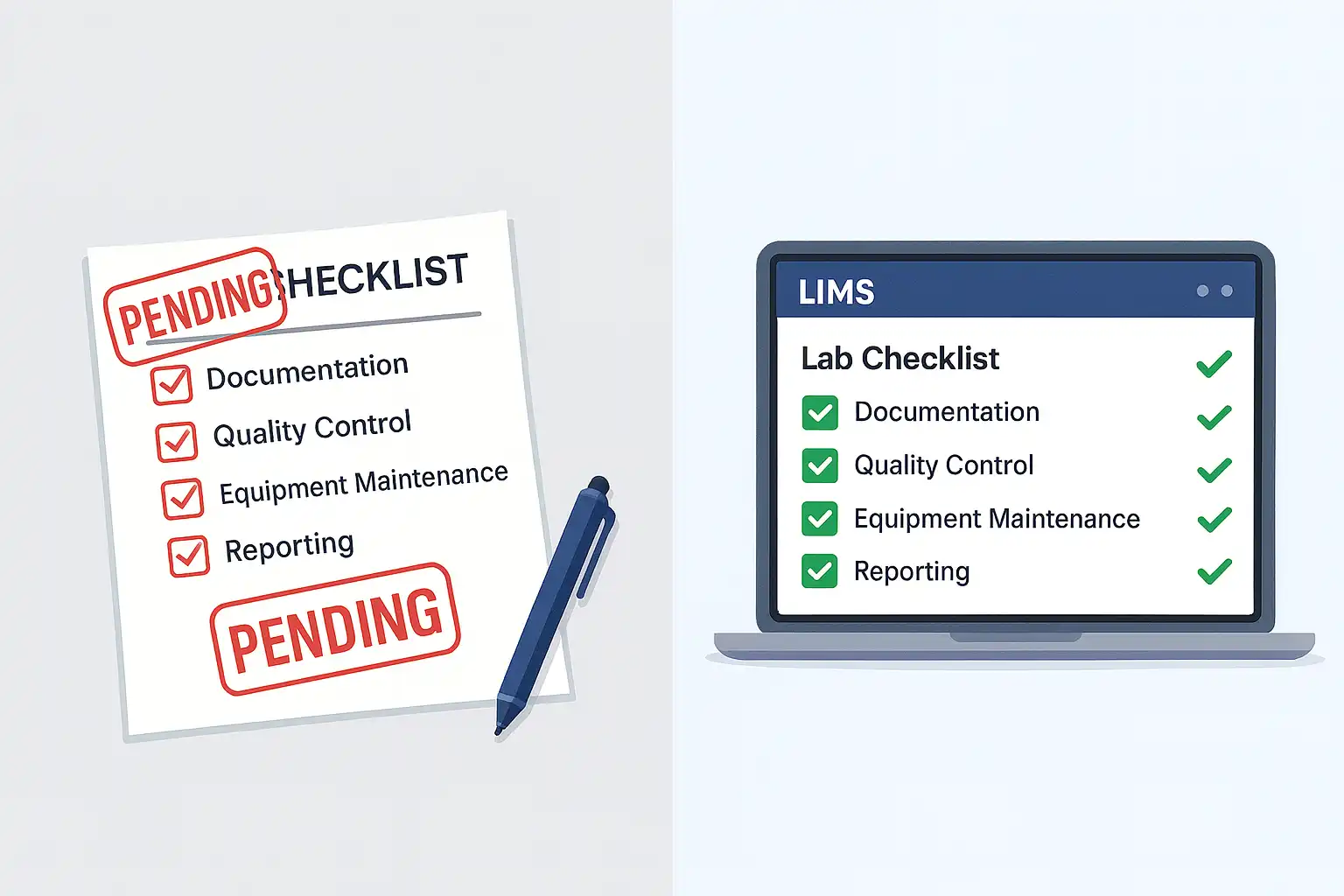
ICMR guidelines are essential for ensuring accuracy, safety, and standardization across India’s diagnostic labs. They establish a comprehensive quality framework that all contemporary labs must adhere to when paired with NABL accreditation. However, it is impossible to achieve consistent compliance manually; instead, labs require dependable systems that uphold traceability, automate quality control, enforce standardized workflows, and safeguard data integrity.
This is where Image Computers‘ and Mechsoft Digital Technologies’ LIMSXL becomes useful. Labs find it much simpler to maintain compliance with both ICMR guidelines and ISO 15189/NABL requirements thanks to its organized, NABL-aligned workflows, analyzer integrations, audit trails, and secure data management.
Adopting a strong LIMS like LIMSXL is the obvious next step for labs looking to improve quality and future-proof their operations.